The SaaS Chopping Block: What Happens When Anyone Can Build Software?
Why some products are still worth buying instead of building, even as AI changes the economics of software.
Preston Kwei6 min read
Over the past few months, I’ve started replacing software I use every day with versions I built myself, from small utilities to the infrastructure behind my websites.
AI coding agents are what made that possible. My versions don’t have every feature of the products they replace, but they don’t need to. They have the ones I actually use, plus a few the originals never had.
It’s made me question something bigger than my own subscriptions: if building software becomes cheap and accessible enough, what makes it worth paying for in the first place?
What's on the Chopping Block?
Some of these tools replaced subscriptions I was already paying for, while others replaced ones I was considering. Somewhere along the way, it became less about saving money and more about seeing just how much I could build myself.
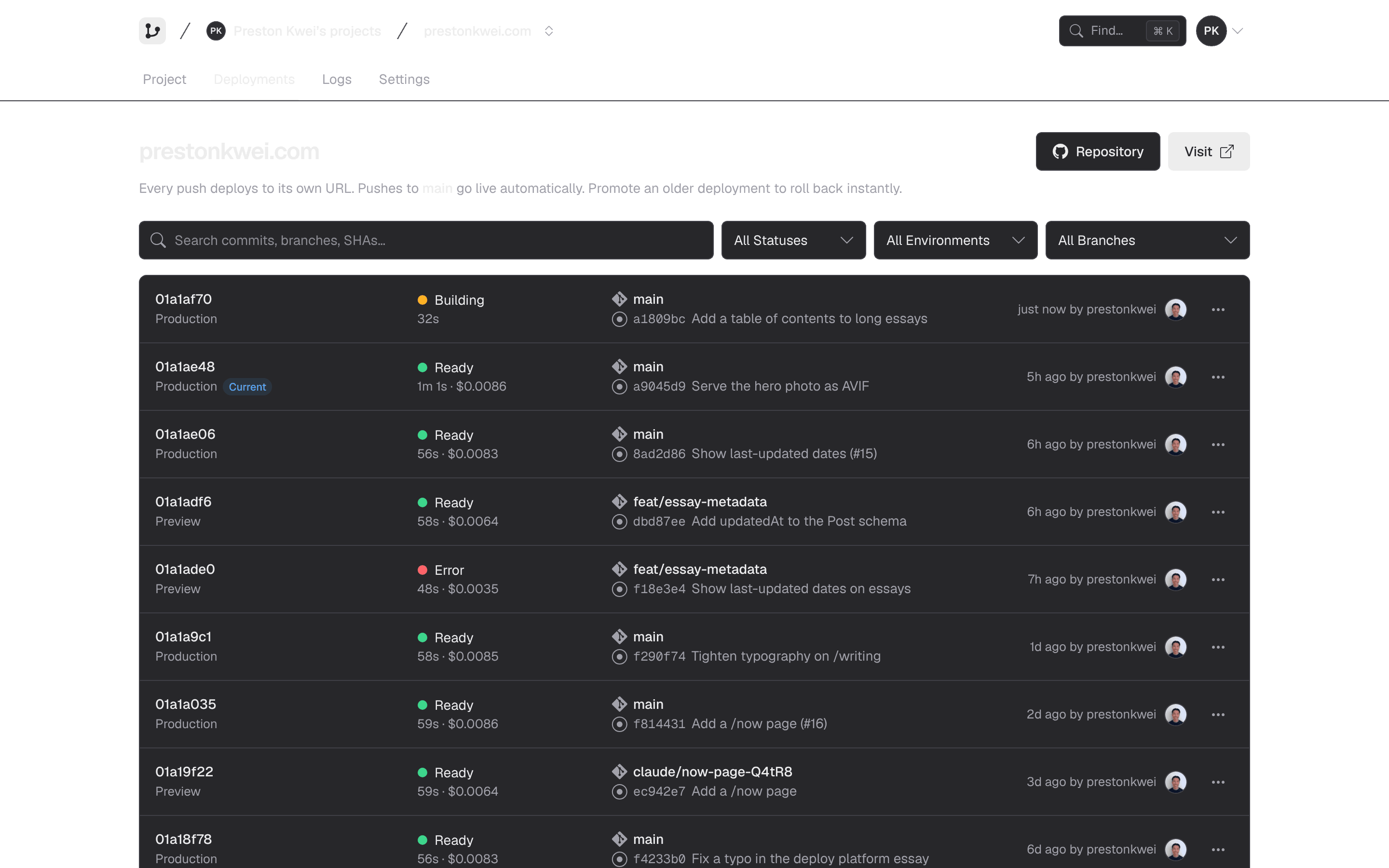
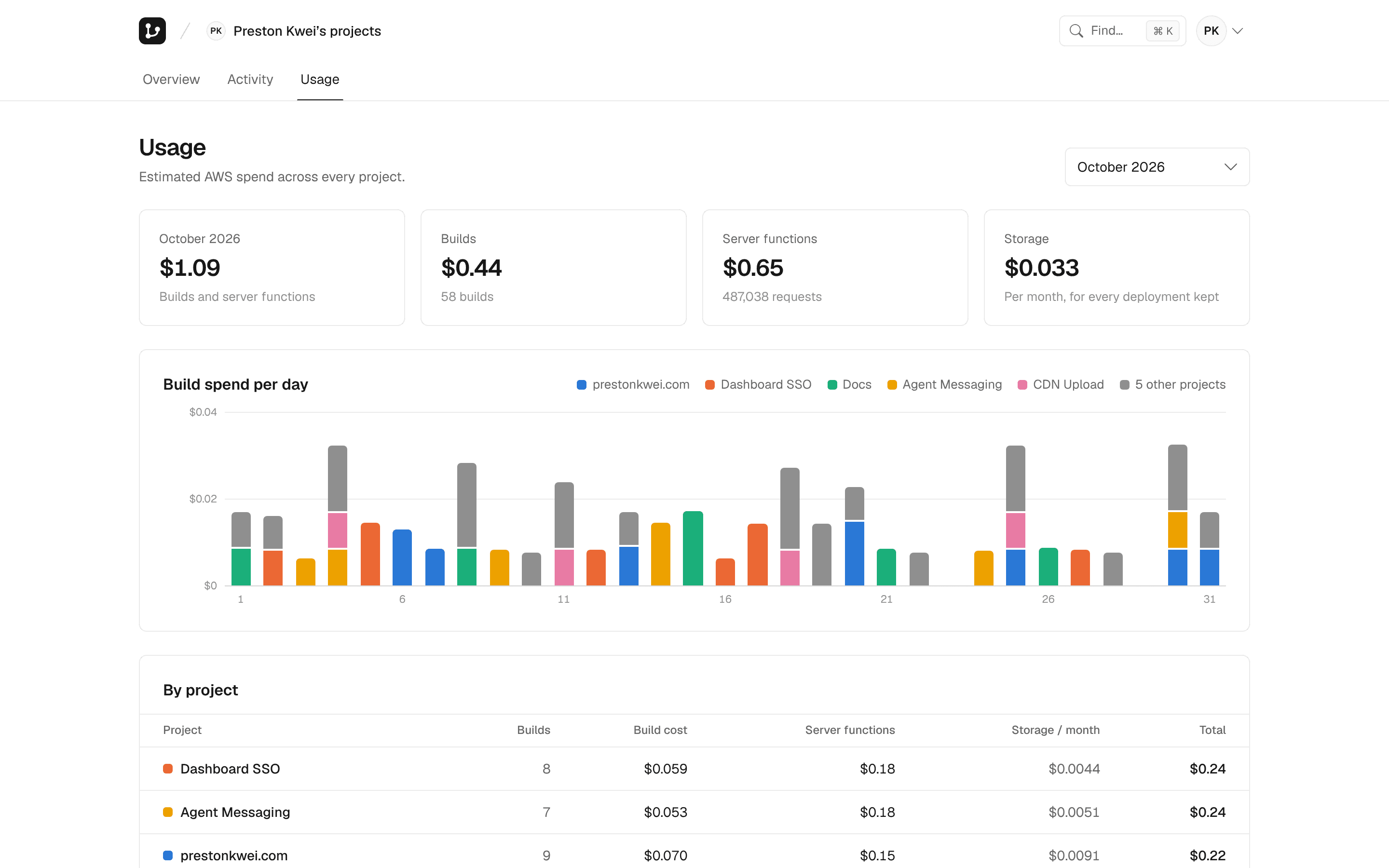
One of the biggest was Vercel, the platform I used to deploy and host my websites. I was only on the $20 a month plan. The version I built on AWS costs about $4 a month, depending on how often I deploy. So far, I've moved around eighteen projects off Vercel and onto my own platform, including some of my public sites.
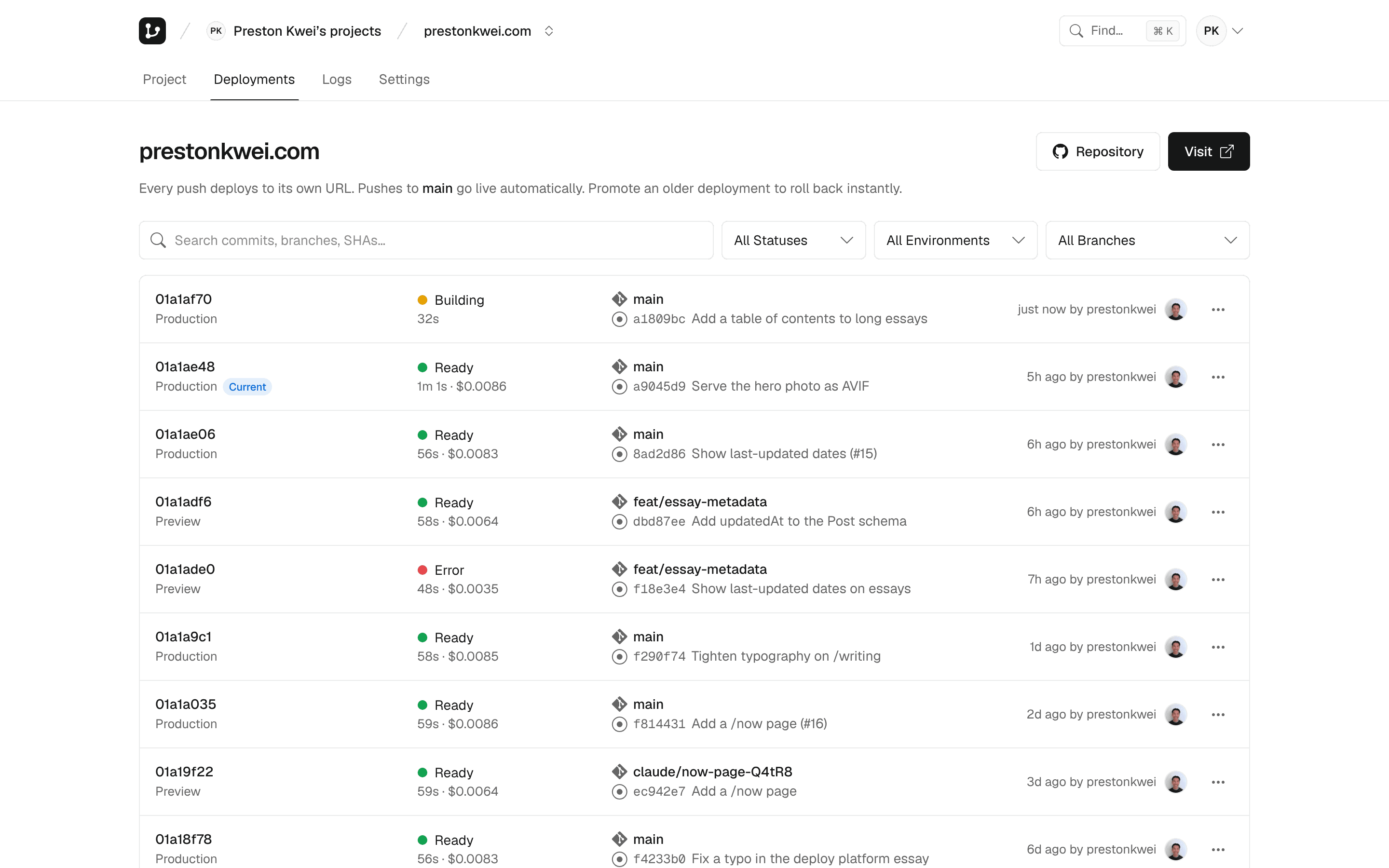
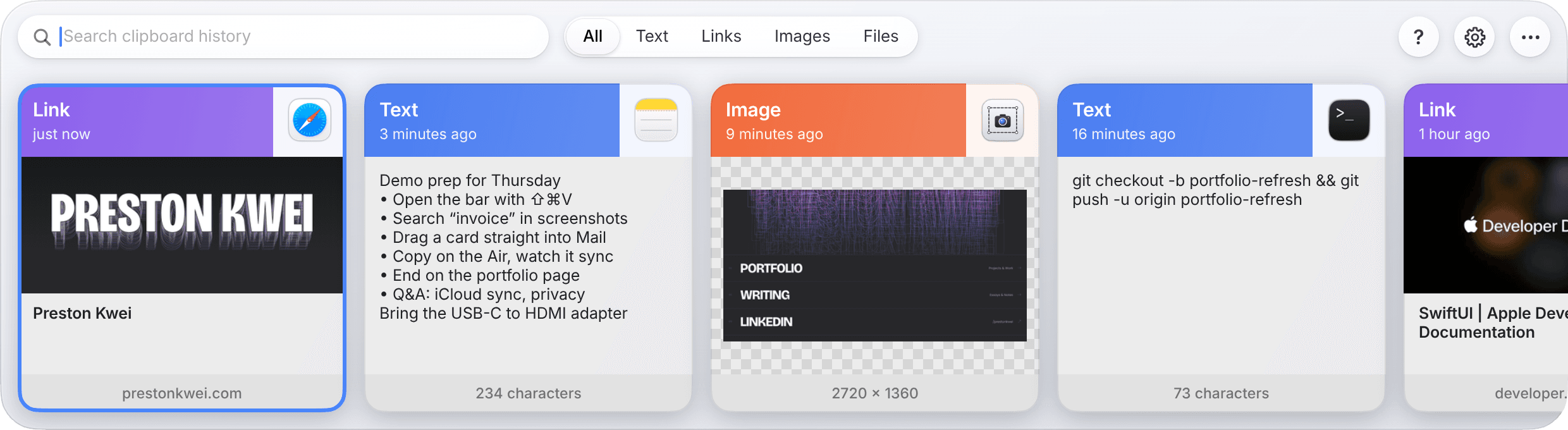
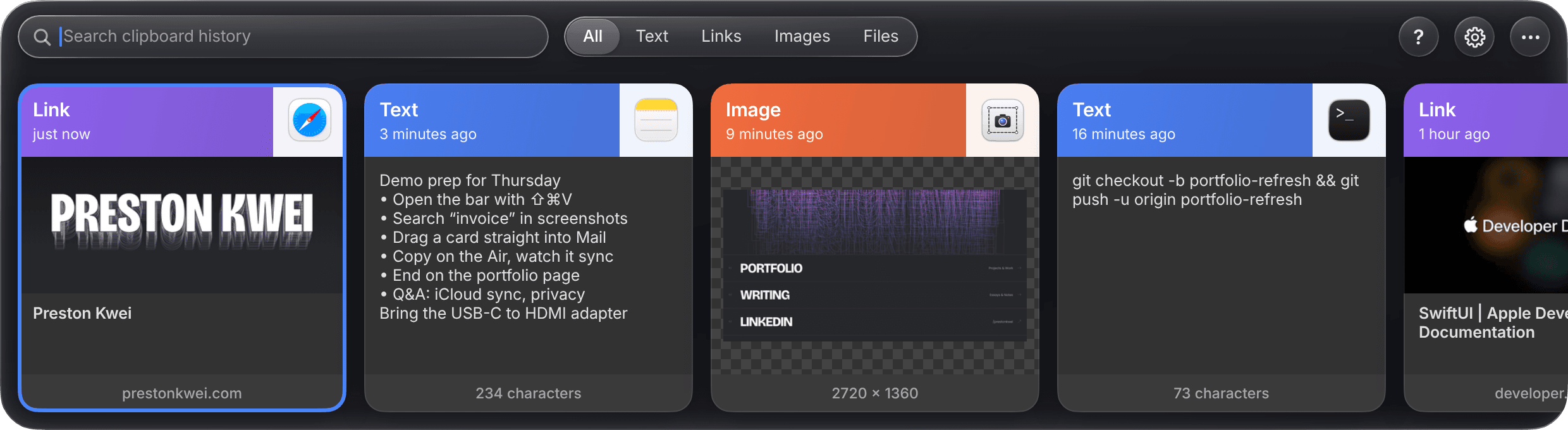
I've also started building alternatives to smaller applications I use every day, including a clipboard manager, a screenshot annotation tool, and an application that keeps a searchable history of what I've seen on my computer. The clipboard manager, for example, syncs my clipboard history across my Macs, so something I copy on one computer is immediately available on another.
I've taken the same approach with infrastructure. I replaced my VPN subscription with a self-hosted alternative and built an identity provider to manage how I sign in to different applications. Some of these projects were motivated by cost, others by customization or curiosity.
Why Building Became an Option
Until recently, I wouldn't have considered building most of these tools myself. Even relatively simple applications could take days or weeks to develop, and maintaining them was another commitment entirely. The time and effort involved rarely justified building something for my own use.
The clipboard manager is a good example. It's a native Mac app, which meant Swift, entitlements, certificates, and iCloud sync. I didn't know how to code in Swift when I started. I still don't. Without AI agents, I don't think I could have built it.
There's also an advantage to building software for an audience of one. Commercial products have to accommodate thousands or millions of users, each with different needs. I only have to account for my own. I can build exactly the features I use, leave out everything else, and customize the experience around how I actually work.
What surprised me most was how little I needed to know. My deployment platform had real problems early on. Deployments took forever, and sometimes a finished deployment never showed up on the production URL. That was ironic, since speed was the reason I used Vercel in the first place. Fixing it mostly took more prompting. Technical knowledge still helps, but knowing how to write every line of code is no longer a requirement. I've found that the more important skill is understanding what to build and recognizing when something isn't working.
The Economics of Software Abundance
AI is making software cheaper and easier to build, but I expect overall technology spending to increase.
Jevons paradox helps explain why. In 1865, the economist William Stanley Jevons pointed out that more efficient steam engines hadn’t reduced Britain’s coal consumption. They made coal cheaper to use, which opened up new uses and increased demand overall. I think software is heading the same way. As AI makes applications cheaper to build, people will build software for problems that were never worth solving before. The cost of each application falls, but the number of applications grows even faster. And all of that software still needs somewhere to run, so demand for infrastructure grows with it.
I've seen this myself. My overall costs have fallen, but I'm building far more software than I ever have, including applications I never would have considered creating before. What I still spend has shifted toward AWS and AI development tools.
According to a July 2026 forecast from Gartner, worldwide IT spending is expected to reach $6.37 trillion in 2026, a 14.2% increase from 2025. Spending on data center systems is projected to grow by 62.5%, infrastructure as a service by 29.3%, and software by 15.5%.1
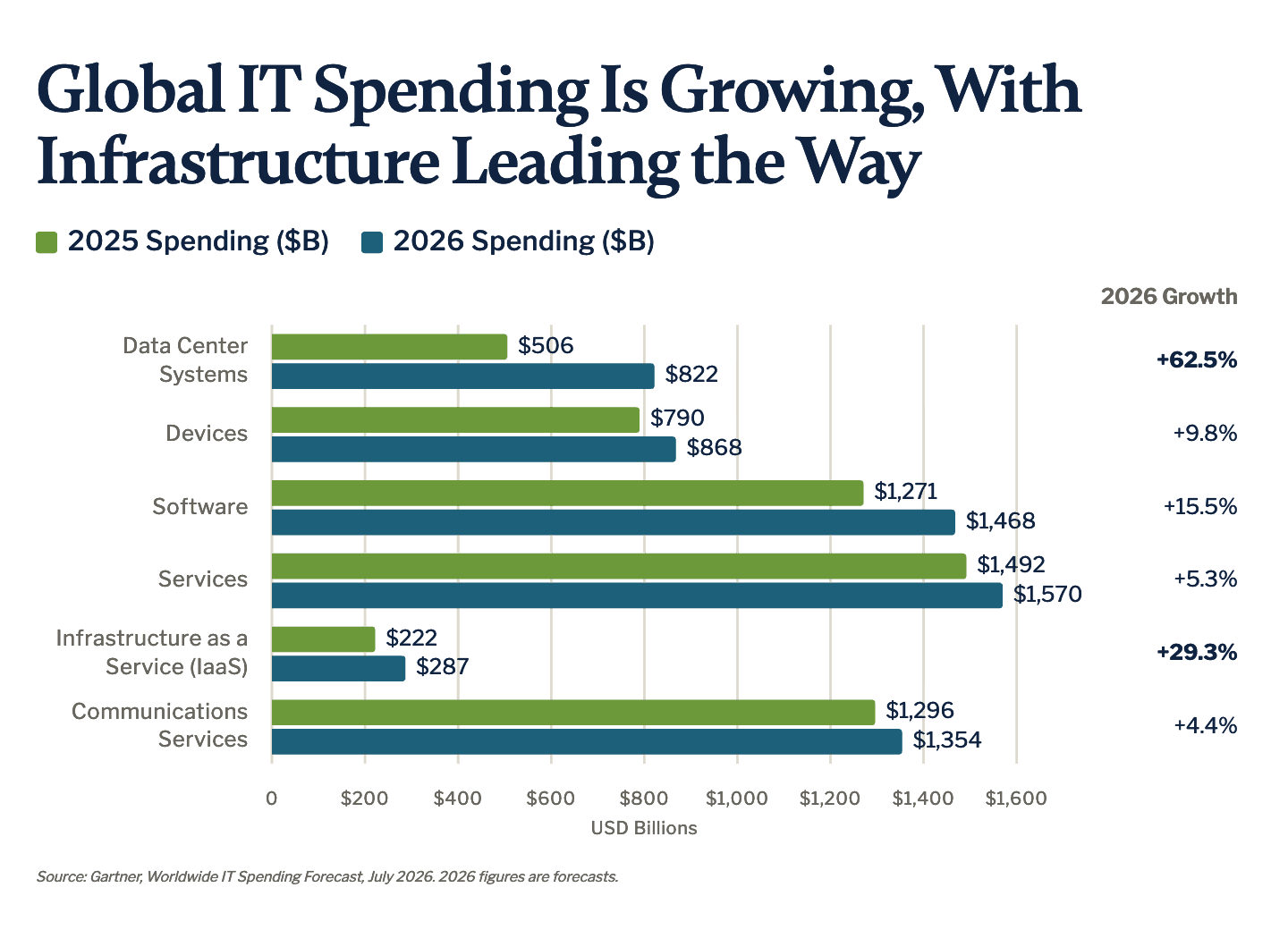
Gartner attributes most of that growth to AI investment broadly, not specifically to people building their own software. Still, it shows that technology spending can keep rising even as the cost of building individual applications falls.
I expect the software industry to grow dramatically, but the companies capturing that growth will change. Products whose primary advantage is functionality that customers can increasingly reproduce will face greater pricing pressure, while companies providing the infrastructure and services behind an expanding software ecosystem stand to benefit.
What Makes Software Worth Paying For?
Some software survives because of trust and liability, some because it's too mission-critical to risk building yourself, and some simply because the relationship with the product feels good enough to earn its place in the stack.
Trust isn't automatically a moat, though. I built my own password manager, which is about as trust-heavy as software gets. What matters is whose trust is on the line. My password manager only has to be trusted by me. An e-signature platform, on the other hand, has to earn the trust of everyone relying on the agreement. That's a much harder problem to solve, and a good reason I'm not building my own DocuSign. Even when building an alternative becomes technically feasible, taking on that responsibility may not be worthwhile.
Email is my best example of software that's too mission-critical to build yourself. I tried paying for Superhuman, but emails would often fail to arrive in my inbox, even though I could see them in Gmail. After I tried building my own email client, I quickly realized how hard that is to get right. When my clipboard manager breaks, I lose a copied link. When email breaks, I miss messages and might never find out.
Some software stays for reasons that aren't entirely rational. These products earn their place through the experience they provide and the relationships users develop with them. Wispr Flow is one of those products for me. I use it every day, and while I could probably build something with much of the same functionality, I don't particularly want to. I was an early user, and over time I've developed a certain loyalty to the product and the company behind it.
Some products go further. People call themselves Apple people or Android people, and switching would mean giving up a small piece of who they are.
That connection is far harder to replicate than the software itself.